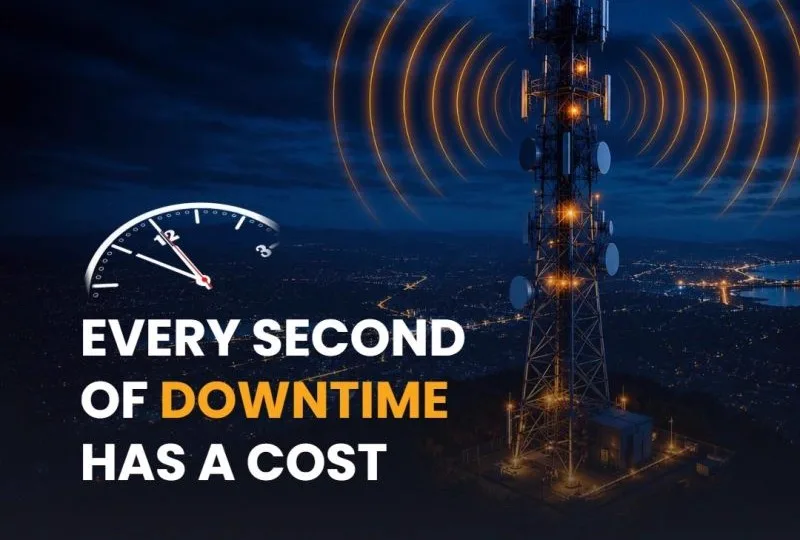
Telecom towers do not get downtime. But in Sri Lanka, the grid often does.
For tower operators and infrastructure managers, this is not a new problem. It is a daily operational reality that shapes every decision around site power design, maintenance scheduling, and contingency planning. And as network quality expectations rise and SLA frameworks tighten, the cost of getting power wrong is increasing.
What telecom applications demand from a generator
Generic commercial generators are not always the right fit for tower applications. The power requirements of a telecom site are specific, and the generator specification needs to reflect that.
Automatic Mains Failure and Automatic Transfer Switch integration is non-negotiable. When grid power drops, the switchover to generator power must be seamless and within seconds. Manual intervention at a remote site is simply not a viable option.
Fuel efficiency matters significantly for remote site economics. A generator that consumes more fuel than specified at partial load directly increases operating costs across a fleet of dozens or hundreds of sites. Right-sizing the generator to the actual tower load, rather than over-specifying, is one of the most impactful decisions an infrastructure team can make.
Sensitive electronic loads require clean, stable power output. Voltage and frequency must stay within tight tolerances to protect active radio equipment and avoid false shutdowns or equipment damage.
The cost of getting this wrong
Tower downtime has a direct financial consequence. SLA penalties under operator agreements represent one layer of cost. Network quality degradation, dropped coverage, and increased complaint volumes represent another.
Best practices for tower power management
Right-size every installation against the actual load profile of the site, not a rounded estimate. Implement a fuel management protocol that accounts for replenishment cycles at remote locations, particularly during periods of high grid instability when generator run time is elevated. Schedule preventive maintenance at intervals appropriate for the operating conditions of each site.
Document everything: run hours, fuel consumption, fault histories, and service records. The data pattern across a tower fleet is one of the most valuable tools an infrastructure manager has for anticipating failures before they occur.
VoltEdge Power Solutions works with telecom and infrastructure operators across Sri Lanka, providing generator supply, AMF/ATS panel integration, fuel system management, and scheduled maintenance contracts built around the uptime requirements of critical sites. If your tower power infrastructure needs a more structured approach, we would welcome the conversation.