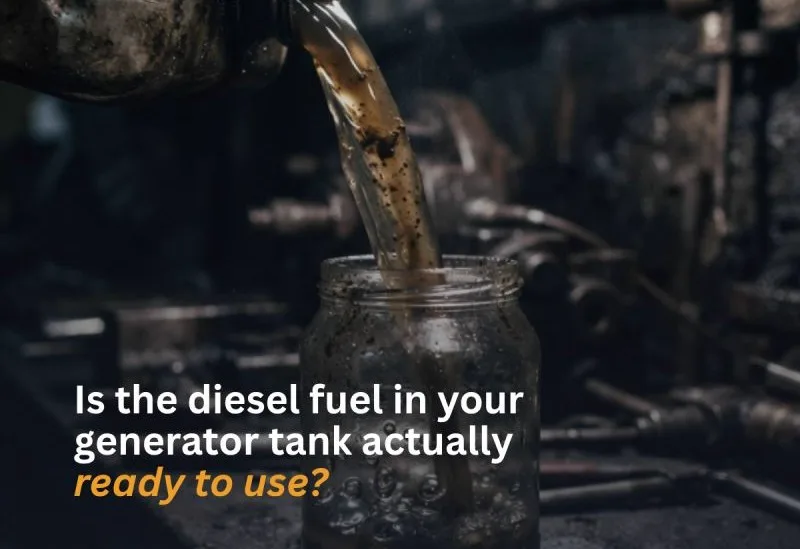
A generator can pass every routine inspection and still fail to start properly during an outage because of what’s in the fuel tank.
Most generator maintenance programmes cover oil, filters, batteries, and AMF panels. Fuel quality rarely gets the same attention. Yet degraded or contaminated fuel is one of the most common causes of hard starts, rough running, and injector failure in standby generators, particularly units that sit idle for weeks between test runs.
Water contamination
Diesel tanks breathe. As temperature fluctuates, air enters and exits the tank, and the humidity in that air condenses on the internal tank walls. In Sri Lanka’s climate, this process is accelerated. A partially filled tank has more airspace, which means more condensation surface and more water accumulating at the bottom over time. Water in a fuel tank corrodes the tank lining, damages injectors, and creates the conditions for a more serious problem.
Diesel bug
Where water and diesel meet, microbial growth follows. Bacteria and fungi colonise the fuel-water interface, producing a dark, slime-like sludge commonly known as diesel bug. This sludge clogs fuel filters and injectors, restricts fuel flow, and causes exactly the kind of hard starts and power loss that standby generators cannot afford at the moment they are needed.
Fuel degradation
Diesel is not an indefinitely stable fuel. Stored beyond 12 months, it begins to oxidise, losing combustibility, forming sediment, and leaving deposits that affect injector performance. Standby generators that run infrequently and never fully cycle their tank contents are particularly vulnerable. The fuel sitting in the tank may look clean and still fail to perform.
What can you do?
Keep the tank as full as practical to minimise the condensation airspace. Use a biocide fuel treatment periodically, especially in humid conditions. Schedule a fuel quality check annually as part of your maintenance programme. If the tank has not been fully changed or polished in two or more years, fuel polishing, a process that circulates and filters the existing fuel to remove water, sediment, and microbial contamination, is worth serious consideration before the next extended outage season.
VoltEdge fuel services
VoltEdge includes fuel system inspection as part of scheduled maintenance visits. For tanks requiring more intervention, we offer fuel polishing as a standalone service so your generator has clean, combustible fuel ready when it matters.
A generator is only as reliable as what you put in it.